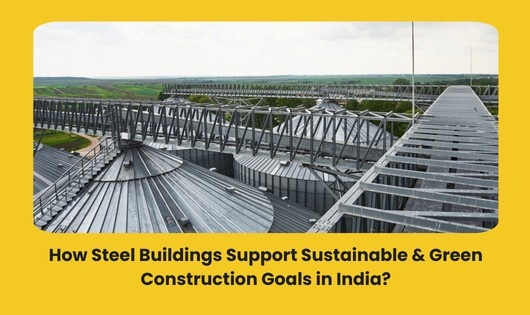
The construction sector of India is growing at a rapid pace. You can see the challenges growing as well. Today, rapid urbanization aside, scarcity of resources and the effects of climate change are also becoming prominent. In 2026, you can see how the government is going ahead with green building norms under GRIHA and LEED as well as pushing initiatives like the National Mission for Sustainable Habitat. In such a scenario, steel buildings are turning out to be a game-changer.
Steel, unlike traditional concrete or brick structures, are extremely efficient. These are eco-friendly and can last for a long time to come. Find out how steel buildings support sustainable and green construction goals in India.
Recyclability and Reduced Waste
It is possible to recycle steel for as many times as needed. According to the Material Recycling Association of India (MRAI) and Ministry of Steel reports, around 20 – 25% of the total crude steel production in India is possible due to steel scrap usage.
Structural steel itself can be recycled up to 95%. Its use reduces landfill waste significantly, aligning with the Swachh Bharat and waste management policies of India. In projects like warehouses in the industrial hubs of Gujarat, the modular design of steel minimizes on-site scraps. This reduces emissions as well as disposal costs.
Energy-Efficient Manufacturing
Steel production via Electric Arc Furnaces (EAF) uses significantly less energy than traditional methods. This makes it suitable for Tata Steel’s initiatives and other green steel projects in India. Pre-engineered buildings (PEBs) arrive factory-assembled. It reduces transportation emissions by as much as 30 to 50%. It supports net-zero objectives, particularly in the manufacturing belts of Maharashtra and other areas that require a lot of energy.
Speedy Construction Lowers Carbon Footprint
As compared to regular structures, it takes 30 – 40% less time to erect steel structures. This has been witnessed in the rapid metro expansions in Delhi. Due to shorter timelines, there is less equipment runtime, fuel use and worker exposure. It manages to reduce overall CO2 emissions by 20-25%.
Under PMAY (both Urban and Gramin), Light Gauge Steel Framing (LGSF) technology is being promoted heavily for mass housing.
Durability for Long-Term Sustainability
When galvanized, steel can manage to resist corrosion, earthquakes and monsoons. It can last for over 50 years even with minimal maintenance. Due to this longevity, it can reduce the needs for replacement in seismic zones like the Himalayas or flood-prone Kerala. This helps to preserve resources. As per research on lifecycle analyses, steel buildings have a 40% lower environmental impact over decades.
Lightweight Design Saves Foundations
The weight of steel is 1/3rd of concrete, which makes it apt for structures that need shallower foundations. It helps to save on 20-30% on materials, like cement, which is a major polluter. It is vital for areas with low water availability, such as Rajasthan.
In India, steel is a fixture in many sustainable and green construction projects. This material is making carbon-neutral construction possible easily, powering the green production initiatives of even industry leaders like JSW Steel, taking the nation forward.