The construction sector in India is changing rapidly. In 2026, many project owners are facing a lot of pressures in terms of rising construction expenses, tight deadlines and high demands for sustainability. In this scenario, you can see the rise of Pre-Engineered Buildings (PEB).
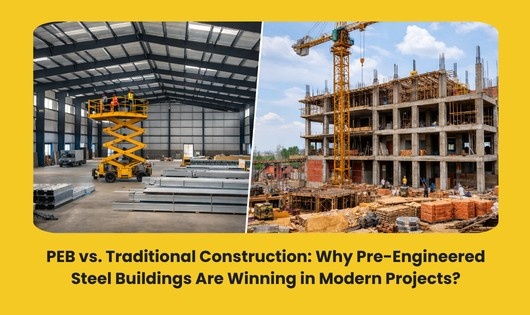
These are nothing but steel structures, designed and fabricated off-site, to be assembled fast. Regular construction involves the use of concrete brick and labor-intensive techniques on site. In contrast, PEB makes use of standardized components, to boost efficiency. Find out why PEBs are increasingly being used in modern projects – such as factories, warehouses and commercial spaces.
Lightning-fast construction timelines
As compared to traditional methods, PEB projects reduce construction times by as much as 30-50%. It is easy to pre-cut and bolt components together on-site, which helps to avoid prolonged curing period, as seen in case of concrete. Even a 10,000 sq ft warehouse, which takes six to 8 months to be built through traditional methods, can be constructed in just 2 to 3 months with PEB. For businesses that are expanding operations, it can minimize downtime significantly.
Cost-savings
It is possible to save as much as anywhere between 20 to 40% up front due to reduced labor and optimized material use. Overall expenses can be reduced, due to the fact that there is no wastage from on-site cutting or delays due to weather. There can be long-term reduction in maintenance costs with PEB, with the help of durable steel frames that are resistant to rot and pests.
Superior strength and durability
Designed for seismic zones and high winds, PEBs are able to last much better than traditional builds even in extreme conditions. Galvanized steel resists corrosion, which makes it last for over 50 years. In industrial settings or hurricane-prone regions, there are fewer structural failures or insurance claims due to this reliability.
Unmatched design flexibility
With PEB, there is no need to deal with the rigid limitations of concrete molds. In the absence of internal columns, these allow expansive clear spans up to 100 meters. This makes it ideal for open-plan factories or showrooms. These structures can be customized with cladding, insulation and mezzanines, tailored to the needs of all. These can be scaled for everything – from gyms to logistics hubs.
Eco-friendly edge
In 2026, there cannot be any compromise on the sustainability front. Much less steel is used in PEB than traditional steel frames. Minimal site waste and recyclable materials ensure that construction aligns with green certifications like LEED. When paired with solar panels for net-zero projects, it outpaces resource-heavy conventional methods.
Quality control – from factory to field
In PEB structures, every bolt and beam is fabricated in controlled factories with CNC precision. The results are highly consistent due to this reason. Traditional on-site work varies with weather and crew skill, risking defects. Due to rigorous testing, there are higher safety standards, fewer callbacks and compliance with codes like IS 800 for Indian projects.
PEB is redefining construction efficiency in India. Whether it comes to supply chains or booming industrial parks across the country, you just cannot miss the competitive advantage of PEB.