In 2026, industrial construction is evolving at a rapid pace. This is quite natural, considering the fact that businesses are looking for faster, more economical construction solutions that can last for a long time to come. More and more companies are focusing on construction techniques that can help them to reduce project timelines, with no compromise on the quality front.
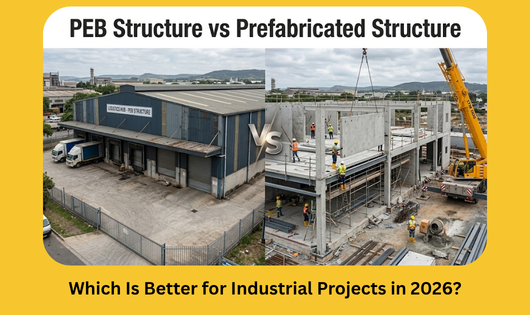
Naturally, the PEB Structure has become a preferred choice for warehouses, manufacturing units, factories, logistic hubs and commercial facilities. The pre-fabricated structure is also becoming popular. Find out which one is better for industrial projects this year – PEB structure or pre-fabricated structure.
Understanding the Difference
It is important to understand the differences between the two construction methods. In a pre-engineered building, advanced engineering calculations are used for designing purposes. Every steel component is customized according to the structural requirements of the project. Due to this level of optimization, there is a significant reduction in the unnecessary use of steel. At the same time, it helps to maintain strength and stability of the structure.
On the other hand, Prefabricated construction is a broader category. It includes:
- Factory-made structural elements,
- Wall panels,
- Roofing systems,
- Modular units, and even
- Complete building sections
Such components are transported to the construction site, where they are assembled fast. Off-site manufacturing is used in both methods but the applications and design philosophies are different, based on the complexity of the project.
Comparing Performance for Industrial Projects
Durability is a major determining factor while making an assessment of industrial buildings. Production equipment, continuous operations, overhead cranes and heavy machinery demand structures that can handle huge loads over decades.
For many industrial applications, especially where scalability and flexibility are big priorities, a Prefab structure can ensure reliable performance and fast installation. However, it is possible to get greater structural optimization from pre-engineered buildings for aircraft hangars, logistics parks, bigger manufacturing facilities and warehouses where it is essential to ensure wide column-free spaces.
In 2026, energy efficiency has also become a very important factor to consider. In modern industrial buildings, one can often come across:
- Insulated roofing,
- Natural lighting solutions,
- Ventilation systems, and
- Solar-ready designs
These features help to reduce the operational expenses of businesses while supporting their sustainability objectives.
Cost and Construction Timeline
Across industries, project budgets continue to be a big concern. It is essential to evaluate the overall expenses not only by initial costs of construction but also on the grounds of:
- Lifecycle maintenance,
- Future expansion possibilities, and
- Operational efficiency
Generally, less steel is needed for the construction of pre-engineered buildings. This is because each and every component is optimized through engineering software programs. It often helps to reduce the costs of transportation, fabrication and erection.
When installation is faster, it helps to reduce labor expenses. Businesses can start operating sooner, which improves return on investment.
Prefabricated structure offers excellent value for projects that need modular expansion or standardized layouts. Businesses that expect phased growth can add new sections with minimal disruption. Naturally, it is a practical approach for many companies with evolving industrial operations.
Which Option Is Better in 2026?
The answer depends on the specific needs of the project. Pre-engineered construction is better for large industrial facilities that need long clear spans, high structural efficiency and customized engineering.
Fabricated systems are more appropriate for businesses that look for modular flexibility and faster deployment. Those with smaller industrial units may stand to benefit as well.
At a time when industries are opting for eco-responsible construction, smart manufacturing and automation, both building methods have their takers. Choosing the right solution involves making a proper assessment of site conditions, long-term operational costs, production requirements and future expansion plans rather than focusing only on initial investment.