Setting up a new facility often feels like solving a puzzle with moving pieces. One week, the approvals stall. The next, a shipment gets delayed. Crew availability shifts without notice, and the project clock keeps ticking.
These aren’t edge cases anymore; they’ve become routine. Which is why more businesses are moving away from traditional builds.
Across logistics, warehousing, and processing units, PEB buildings in India are now being treated as default, not backup.
Speed doesn’t just help (it unlocks the entire project)
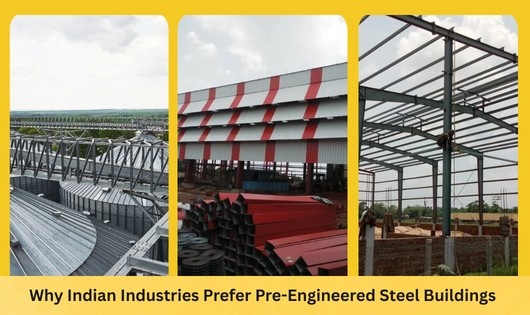
With pre-engineered steel buildings in India, most of the work happens before anything reaches the site.
Framing components are cut, welded, and painted under controlled conditions, then delivered for assembly. There’s no waiting on-site for beams to dry or columns to settle.
Once the foundation is ready, crews can raise the full shell of the structure in days. That kind of pace removes the usual hold-ups. This is especially helpful in smaller towns or zones with short working windows.
We’ve seen it make the difference between a plant missing seasonal demand or meeting it.
The structure adapts to your operations, not the other way around
Steel frameworks allow for long, clear spans (up to 30 meters) with fewer interior columns to get in the way.
You can match the height, loading specs, and bay widths to the process flow inside. That way, your forklifts, conveyors, or assembly lines move through the space as they should, not around structural obstacles.
We’ve often been pulled into design discussions early just to make sure the drawings actually hold up when equipment is installed.
Consistency across locations reduces execution risk
In RCC construction, outcomes often hinge on the experience and coordination of local site teams. With steel buildings, performance ties back to the drawings and how closely fabrication follows them. Since most components are factory made, variation drops sharply from one site to another.
A bolt hole in Gujarat aligns the same way as one in Assam. Paint thickness, weld quality, and section tolerances stay within defined limits. This level of consistency makes planning easier for companies building across regions.
Teams can standardize layouts, move equipment between facilities, and replicate workflows without adjusting for structural differences.
Over time, that predictability lowers rework and brings more control to multi-location expansion.
Growth planning starts from day one
Facilities built today often need expansion within two or three years, sometimes sooner than expected. Steel frames support this kind of change far more smoothly when the initial design anticipates it.
Many teams choosing pre-engineered steel buildings in India ask for provisions that keep future options open. That could include spare bays, anchor points, or additional load capacity in the rafters for equipment or mezzanine levels added later.
When these details are planned early, expansion becomes an extension rather than a disruption.
Final Thoughts
Steel buildings aren’t a trend. They’re a shift in how industries think about speed, adaptability, and long-term value.
Across our projects (whether for warehousing, processing, or manufacturing), we’ve seen that most clients now care as much about what happens after the building is ready as they do about how quickly it goes up.
With pre-engineered systems, the structure becomes less of a bottleneck and more of an enabler.
We handle both design and fabrication in-house so that each element, from rafter pitch to roof sheeting, fits where it should, not just technically, but operationally. To learn more, please get in touch with our team.